
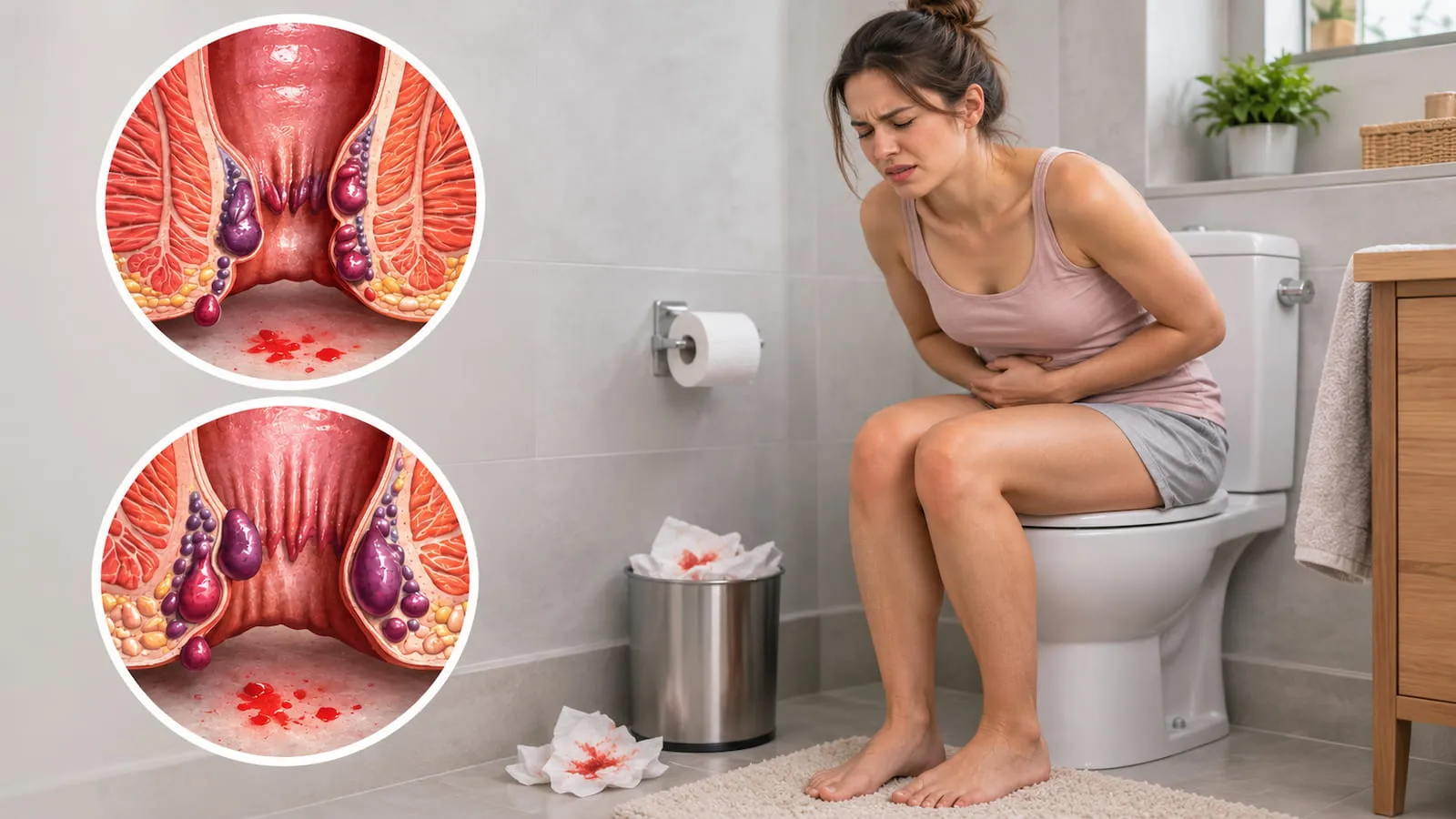
If you've searched for "homeopathic medicine for piles," you've probably seen long lists of remedies — each claimed to be the best. The truth is simpler: the right medicine depends on your specific pattern of symptoms, not the diagnosis alone.
This guide explains how remedies are actually chosen, what the most commonly studied ones look like in practice, and what a realistic treatment timeline looks like.
Why One Diagnosis Doesn't Mean One Remedy
In homeopathy, two people with piles can need different medicines. The reason: homeopathy treats the person, not just the veins.
A patient with painful, non-bleeding external piles needs a different remedy from one with bleeding internal piles and chronic constipation. The diagnosis is the same; the symptom pattern is not.
That's why "best medicine for piles" is the wrong question. The better question is: what is the right medicine for my pattern?
How a Homeopath Chooses the Remedy
During a first consultation, your doctor builds a detailed picture of your case. Key factors:
- Type and grade — internal or external; grade 1–4
- Bleeding — presence, quantity, colour
- Pain character — burning, aching, cutting, throbbing
- Timing — worse during stool, after stool, at night, when sitting
- Stool pattern — constipation, hard stools, incomplete evacuation
- Associated symptoms — backache, itching, mucus discharge
- General health — diet, sleep, stress, sitting habits
- Constitution — temperament, energy, digestive tendencies
Two patients with identical piles but different general health often need different remedies.
Remedies Commonly Studied for Piles
The following remedies are commonly considered in homeopathic practice. This is informational — not a prescription guide. Your doctor will select and dose based on your full case.
- Aesculus Hippocastanum — for painful, non-bleeding piles with a heavy sensation and backache
- Hamamelis Virginiana — for bleeding piles with soreness and weakness
- Nux Vomica — for piles linked to constipation and a sedentary lifestyle
- Ratanhia — for piles with intense burning pain and difficulty passing stools
- Sulphur — for itchy, burning piles worse at night
- Paeonia Officinalis — for piles with pain and bleeding
- Aloe Socotrina — for itchy, protruding piles with a sensation of insecurity
Your doctor will determine which — if any — matches your case, and what potency and frequency are appropriate.
Why Self-Prescription Doesn't Work
It's tempting to pick a remedy from a list and try it. In practice, this rarely works, for three reasons:
- The remedy is chosen from the whole case, not one symptom. Bleeding alone is not enough — timing, character, and general state all matter.
- Potency and repetition matter. The same remedy at the wrong potency or repeated too often can produce no effect or a temporary reaction.
- Treatment is a process, not a one-off dose. Follow-ups are how the prescription is refined as your body responds.
If you're considering homeopathy for piles, a consultation is the right first step.
What Treatment Actually Involves
The process at our clinic looks like this:
- First consultation — 30 to 45 minutes online. Detailed history, symptom pattern, stool habit, and general health.
- Prescription — a personalised homeopathic medicine, selected for your case.
- Follow-ups — typically every 4 to 6 weeks, to review response and adjust if needed.
- Timeline — acute cases may improve within days to weeks. Chronic or recurrent cases usually need 3–6 months of consistent care.
Treatment runs alongside any topical creams or medication you're on. You don't need to stop them to start homeopathy — your doctor will advise on tapering as symptoms improve.
What Homeopathy Can and Cannot Do
Being honest about outcomes matters.
What homeopathy aims to do:
- Reduce pain, bleeding, and inflammation
- Address underlying constipation and stool pattern
- Reduce the frequency and intensity of flare-ups
- Support relief without surgical intervention in suitable cases
What homeopathy does not claim:
- A permanent cure in every case
- Immediate relief in acute, thrombosed, or strangulated piles
- Replacement for surgical care in grade 3–4 piles where surgery is indicated
Results vary. Some patients reach a point where symptoms are mild and infrequent. Others need surgical review. Your doctor will advise honestly.
When to See a Doctor
Book a consultation if:
- Bleeding is heavy or continuous
- Pain is severe or worsening
- Piles are prolapsed and cannot be pushed back
- You notice a change in bowel habit lasting more than a few weeks
- Constipation is chronic
- You're considering surgery
Seek urgent care if you have severe pain with a hard, swollen, bluish lump (possible thrombosed piles), fever, or heavy bleeding.
For a full picture of the condition, see our guide to piles treatment.
Closing
Homeopathic medicine for piles is not a single remedy — it's a personalised process. If you'd like to find out whether homeopathy can help your case, book an online consultation.