
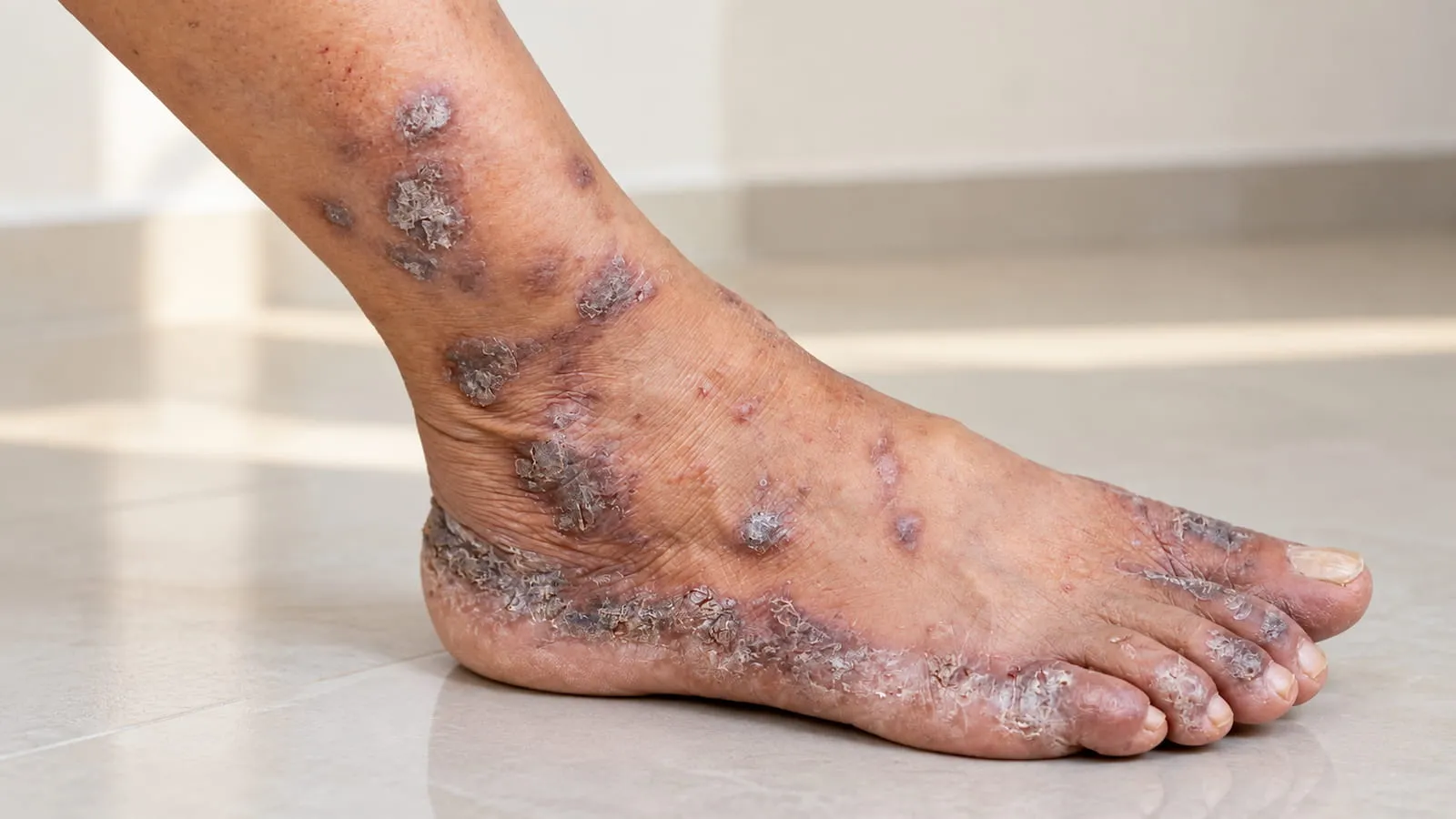
If you've searched for "can psoriasis be cured," you've probably seen two types of answers: yes, absolutely — or no, never. Neither is honest.
Here's what's actually true.
What "Cure" Means in Psoriasis
Psoriasis is not an infection. You can't take a course of medicine and be permanently free of it. It's an autoimmune tendency — your immune system speeds up skin cell production in response to internal and external triggers.
A "cure" would mean the tendency disappears. In practice, that's rare. What's common — and achievable — is long periods of clear or nearly clear skin, with fewer and milder flare-ups.
That's the honest target.
Why the Tendency Exists
Psoriasis has a strong genetic component. If one or both parents have psoriasis, you're more likely to develop it. But genetics alone don't determine severity — triggers, stress, lifestyle, and general health all play a role.
The immune system is essentially over-trained. It attacks healthy skin cells as if they were threats, driving rapid turnover. That turnover — new skin cells rising to the surface in days instead of weeks — is what produces the plaques.
You can't un-train the immune system overnight. But you can reduce its over-reactivity over time.
What Treatment Can Realistically Do
| Goal | Achievable? |
|---|---|
| Clear plaques for extended periods | ✅ Yes |
| Reduce frequency of flare-ups | ✅ Yes |
| Reduce intensity of flare-ups | ✅ Yes |
| Reduce dependence on topical steroids | ✅ Yes, in many cases |
| Prevent progression to psoriatic arthritis | ⚠️ Partly — early treatment helps |
| Complete, permanent cure in every case | ❌ No |
| Immediate clearing in acute flare-up | ❌ Not homeopathy's role |
What Homeopathy Aims to Do
Homeopathy treats psoriasis as a problem of immune over-reactivity, not just a skin problem. The goal is to reduce how strongly your body produces new skin cells and how often it flares.
- Short-term — reduce redness, scaling, and itching
- Medium-term — reduce frequency and intensity of flare-ups
- Long-term — reduce baseline immune over-reactivity
Results vary. Some patients reach long periods of clear skin. Others see partial improvement. Your doctor will discuss realistic expectations for your case. For a fuller explanation, see how the right remedy is chosen.
What Conventional Treatment Does
Topical and systemic treatments are effective — for symptom control.
- Topical steroids — reduce inflammation; not for long-term daily use
- Vitamin D analogues — slow skin cell turnover
- Coal tar and salicylic acid — soften scales
- Phototherapy (UVB) — reduces inflammation in moderate to severe cases
- Systemic medications — methotrexate, cyclosporine, biologics for severe cases
None of these cure the tendency. They manage the symptoms. That's not a criticism — for many people, that's enough.
The Realistic Goal
Rather than "cure," think control. Well-managed psoriasis means:
- Skin is mostly clear or mildly affected
- Flare-ups are occasional, not constant
- You're not dependent on daily steroid creams
- You know your triggers and can avoid them where possible
- Flare-ups are manageable when they happen
- Joint symptoms are absent or mild
That's a good outcome. For most patients, it's achievable.
What Changes the Timeline
Three factors affect how quickly you improve:
- How long you've had it — recent onset responds faster than decades-long cases
- How extensive it is — limited plaques are easier than widespread involvement
- How consistent you are — treatment works on a timeline; missing follow-ups slows progress
Typical timeline: first changes within a month, meaningful improvement by 3–6 months, extended remission often takes 6–12 months of consistent care.
What You Can Do Alongside Treatment
- Manage stress — stress is one of the strongest flare triggers
- Moisturise daily — dry skin worsens scaling
- Avoid skin injury — cuts, scrapes, and sunburns can trigger new plaques
- Limit alcohol and smoking — both aggravate psoriasis
- Maintain a healthy weight — obesity worsens severity
- Protect against infections — treat strep throat early
These aren't cures, but they reduce how often flare-ups occur.
When to See a Doctor
Book a consultation if:
- Plaques cover large areas of the body
- Itching or scaling interferes with sleep
- Topical treatments no longer control symptoms
- You have joint pain or stiffness alongside plaques
- You're considering stopping long-term steroid use
- The condition is affecting your mood or daily life
Seek urgent care if you notice sudden widespread redness and peeling, pus-filled blisters, or fever alongside psoriasis — these may indicate a severe form needing immediate treatment.
For a full picture, see our psoriasis treatment page. To distinguish it from other skin conditions, read psoriasis vs eczema.
Closing
Psoriasis can't be promised a permanent cure — but it can often be brought under long-term control, sometimes to the point where it barely affects daily life. If you'd like to find out what's realistic in your case, book an online consultation.