
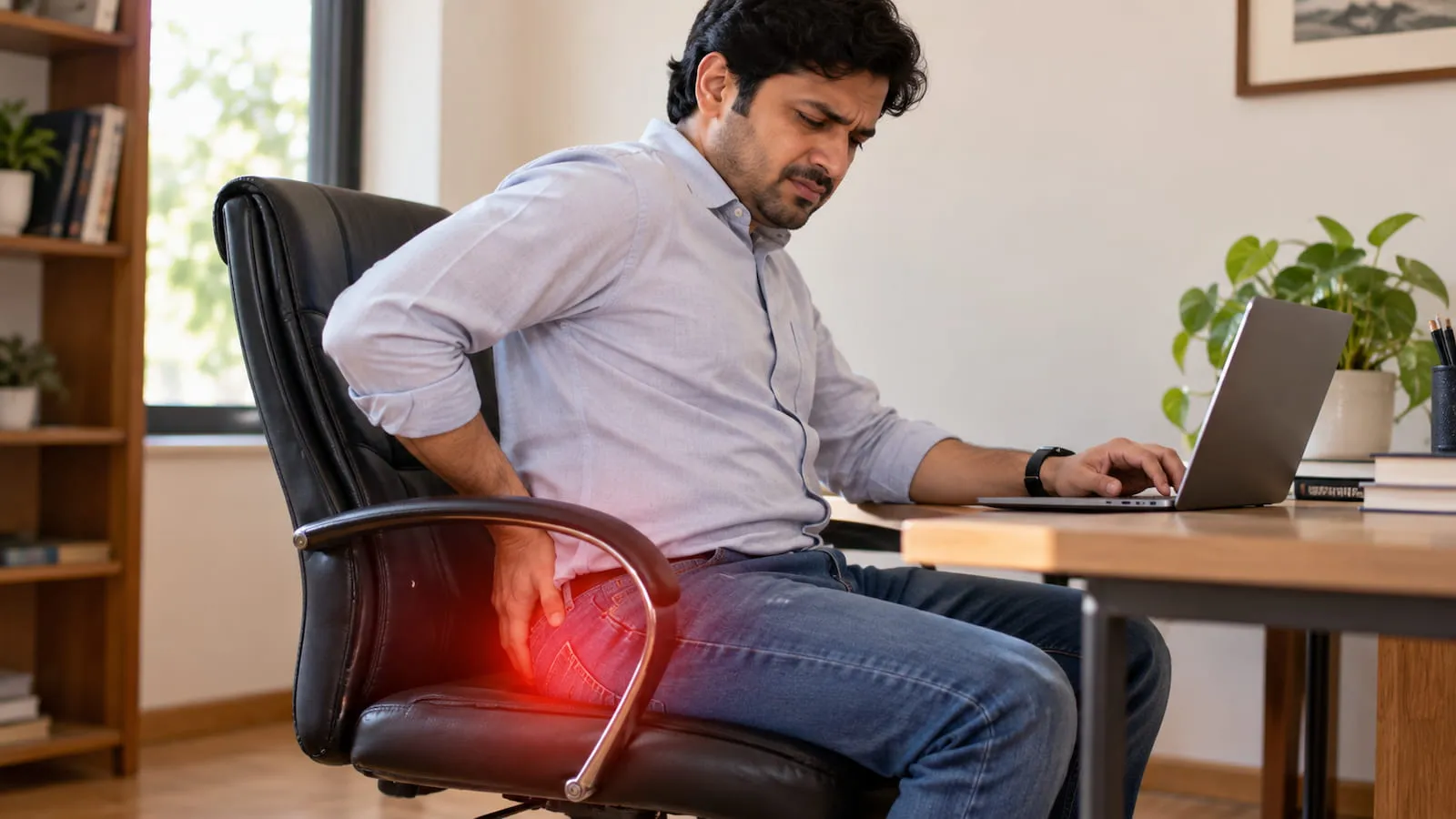
An anal fissure that was supposed to heal in a few weeks is still there after two months. The pain is now predictable — during bowel movements, and for hours afterward. You've tried creams, sitz baths, and diet changes, but the tear hasn't closed.
This is a chronic anal fissure. It behaves differently from an acute one, and it needs a different approach.
What Makes a Fissure "Chronic"
The dividing line is simple:
- Acute fissure — lasts less than 6 weeks
- Chronic fissure — lasts more than 6 weeks
Most acute fissures heal on their own or with conservative care. Chronic fissures are harder because of changes in the tissue and muscle around the tear.
Why Chronic Fissures Don't Heal
Three things keep a chronic fissure from closing:
1. Sphincter spasm
The anal sphincter muscle tightens in response to the tear. This spasm reduces blood flow to the area and prevents the tissue from healing. It's a self-perpetuating cycle — the tear causes spasm; the spasm prevents healing.
2. Reduced blood flow
The anal canal has a relatively limited blood supply to begin with. When the sphincter tightens, blood flow reduces further. Without good circulation, the tear can't close.
3. Tissue changes
Over weeks, the edges of the fissure become thickened and fibrous. A "sentinel pile" (a small skin tag) may develop at the outer edge. These changes make the tear harder to heal without help.
How Chronic Fissure Feels Different
| Feature | Acute Fissure | Chronic Fissure |
|---|---|---|
| Duration | Less than 6 weeks | More than 6 weeks |
| Pain timing | During stool | During and hours after stool |
| Pain character | Sharp, cutting | Sharp + burning, prolonged |
| Bleeding | Common | Less common |
| Sphincter spasm | Mild | Pronounced |
| Response to treatment | Fast | Slow |
| Tissue changes | Fresh edges | Thickened, fibrous edges |
Common Causes of Chronicity
Why does a fissure become chronic? Common factors:
- Ongoing constipation — repeated re-injury
- Hard stools — tearing the healing edge
- Prolonged sphincter spasm — reduced blood flow
- Chronic diarrhoea — irritation prevents healing
- Crohn's disease or IBD — underlying inflammation
- Pregnancy and childbirth — persistent pressure
- Delay in seeking treatment
- Inadequate fibre and water intake
How Treatment Approaches Chronic Fissure
Chronic fissures need a two-part approach: relax the sphincter and support tissue healing.
Relax the sphincter
- Warm sitz baths — 10–15 minutes, 2–3 times daily
- Avoid straining — soft stools prevent re-injury
- Topical treatments as prescribed by your doctor
Support healing
- High-fibre diet — soften stool consistently
- Plenty of water
- Treat constipation aggressively
- Avoid spicy food and alcohol during flare-ups
- Consistent treatment — chronic cases need months, not days
Homeopathic treatment
In homeopathy, chronic fissures are treated constitutionally — the remedy is selected for the whole person, not just the tear. Factors considered:
- Character of pain — sharp, cutting, burning
- Timing — during stool, after stool, lasting hours
- Bleeding pattern
- Stool pattern and digestion
- General constitution and stress levels
For a full explanation, see how the right remedy is chosen.
Timeline: Chronic fissures often need 3–6 months of consistent treatment. Improvement is gradual — pain reduces first, then bleeding, then the tear closes.
When Surgery May Be Needed
If a chronic fissure hasn't healed after 6–8 weeks of conservative care, surgery may be considered.
Common surgical options:
- Lateral internal sphincterotomy — small incision in the sphincter muscle
- Fissurectomy — removal of the fissure tissue
- Botulinum toxin injection — temporarily relaxes the sphincter
Surgery is effective but has risks. It's usually considered after conservative care has been tried. See can fissure heal without surgery? for more.
What Helps — and What Doesn't
Helps:
- Consistent stool softening
- Warm sitz baths
- Not straining or delaying the urge
- Consistent treatment
- Patience — healing is slow
Doesn't help:
- Switching remedies every week
- Harsh laxatives
- Spicy food and alcohol during flare-ups
- Self-prescribing
When to See a Doctor
Book a consultation if:
- A fissure hasn't healed after 6 weeks
- Pain lasts for hours after bowel movements
- Bleeding recurs
- You're considering surgery
- You have Crohn's disease or IBD
- You notice a change in bowel habit lasting more than a few weeks
Seek urgent care if you have heavy bleeding, fever, or severe pain with a hard lump near the anus.
For a full picture, see our fissure treatment page. For the honest answer on surgery, read can fissure heal without surgery?.
Closing
Chronic fissures are frustrating — but they're often manageable with the right approach. The key is consistent treatment, patience, and addressing the underlying constipation. If you'd like to find out whether homeopathy can help your case, book an online consultation.