
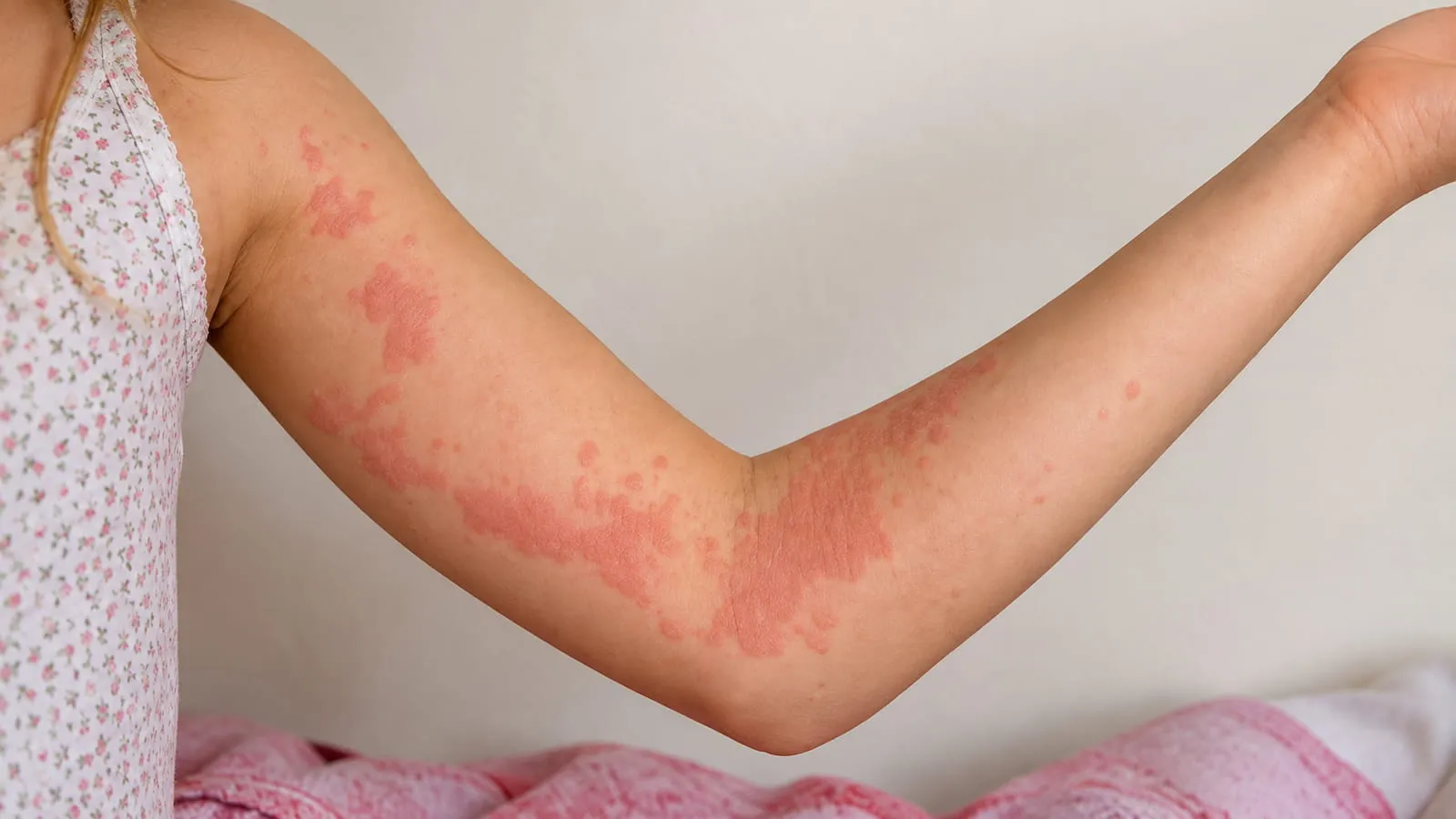
Hives on a child can be alarming — especially the first time. The welts appear suddenly, itch intensely, and seem to move around the body. Parents often wonder if it's an allergy, an infection, or something more serious.
Most cases are acute, self-limited, and manageable. This guide explains what to look for, what triggers hives in children, and when to seek care.
What Urticaria Looks Like in Children
The pattern is the same as in adults:
- Raised welts — red or skin-coloured, often with a paler centre
- Itchy — sometimes intensely so; children may scratch until skin is raw
- Changing location — welts appear and fade within hours
- Moves and merges — individual welts can join into larger patches
- Fades without a mark — no scarring when resolved
The hallmark: the welts move. If a rash stays in one place for days, it's probably not urticaria.
Common Triggers in Children
The most common causes of urticaria in children are different from adults.
Viral infections
The most common trigger. Many children develop hives during or after a cold, flu, or other viral illness — even without a known allergy. These cases usually resolve within 1–2 weeks.
Food allergens
Common foods linked to hives in children:
- Milk
- Eggs
- Peanuts and tree nuts
- Shellfish
- Wheat and soy
Food-triggered hives usually appear within minutes to 2 hours of eating.
Insect bites and stings
Mosquitoes, bees, wasps, and fire ants can all trigger hives — sometimes widespread, not just at the bite site.
Medications
Antibiotics (especially penicillins) and pain relievers are common triggers. Hives may appear days after starting a medication.
Physical triggers
Some children develop hives from:
- Pressure — tight clothing, sitting on a hard surface
- Cold — cold air, cold water, ice
- Heat — warm baths, exercise
- Sunlight — less common
These are called inducible urticarias and can be reproduced by the trigger.
How to Tell It Apart From Other Rashes
| Feature | Urticaria | Eczema | Heat Rash |
|---|---|---|---|
| Appearance | Raised welts | Dry, scaly patches | Tiny pinpoint bumps |
| Location | Moves around | Elbow creases, behind knees | Sweaty areas |
| Itching | Intense | Intense | Prickling |
| Duration per lesion | Hours | Days to weeks | Days |
See our full guide on urticaria vs other skin rashes for detailed comparisons.
What Parents Can Do at Home
- Cool compress on the welts — heat worsens itching
- Loose cotton clothing — reduce friction
- Cool bath — not hot
- Keep nails short — prevent skin damage from scratching
- Antihistamine if prescribed by your doctor
- Note patterns — foods, activities, weather, illness — in a diary
Avoid:
- Hot showers or baths during a flare-up
- Tight clothing or elastic waistbands
- New foods during an active flare-up
When to Seek Urgent Care
Go to the nearest emergency department if your child has:
- Swelling of the lips, tongue, or throat
- Difficulty breathing or noisy breathing
- Vomiting, abdominal pain, or dizziness with hives
- Hives after a known allergen exposure (nuts, shellfish, bee sting)
- Collapse or unresponsiveness
These may indicate anaphylaxis — a severe allergic reaction requiring immediate treatment.
When to Book a Consultation
Book a routine consultation if:
- Hives last more than 6 weeks
- Hives recur frequently without a clear cause
- Antihistamines no longer control symptoms
- Your child's sleep is disturbed most nights
- You suspect a food or medication trigger
- Your child also has eczema, asthma, or allergic rhinitis
For a full picture of the condition, see our urticaria treatment page. For how homeopathy approaches it, read how the right remedy is chosen.
Closing
Most urticaria in children is acute, self-limited, and resolves without complications. For recurring or persistent cases, treatment can reduce flare-ups and identify triggers. If you'd like to find out whether homeopathy can help your child, book an online consultation.