
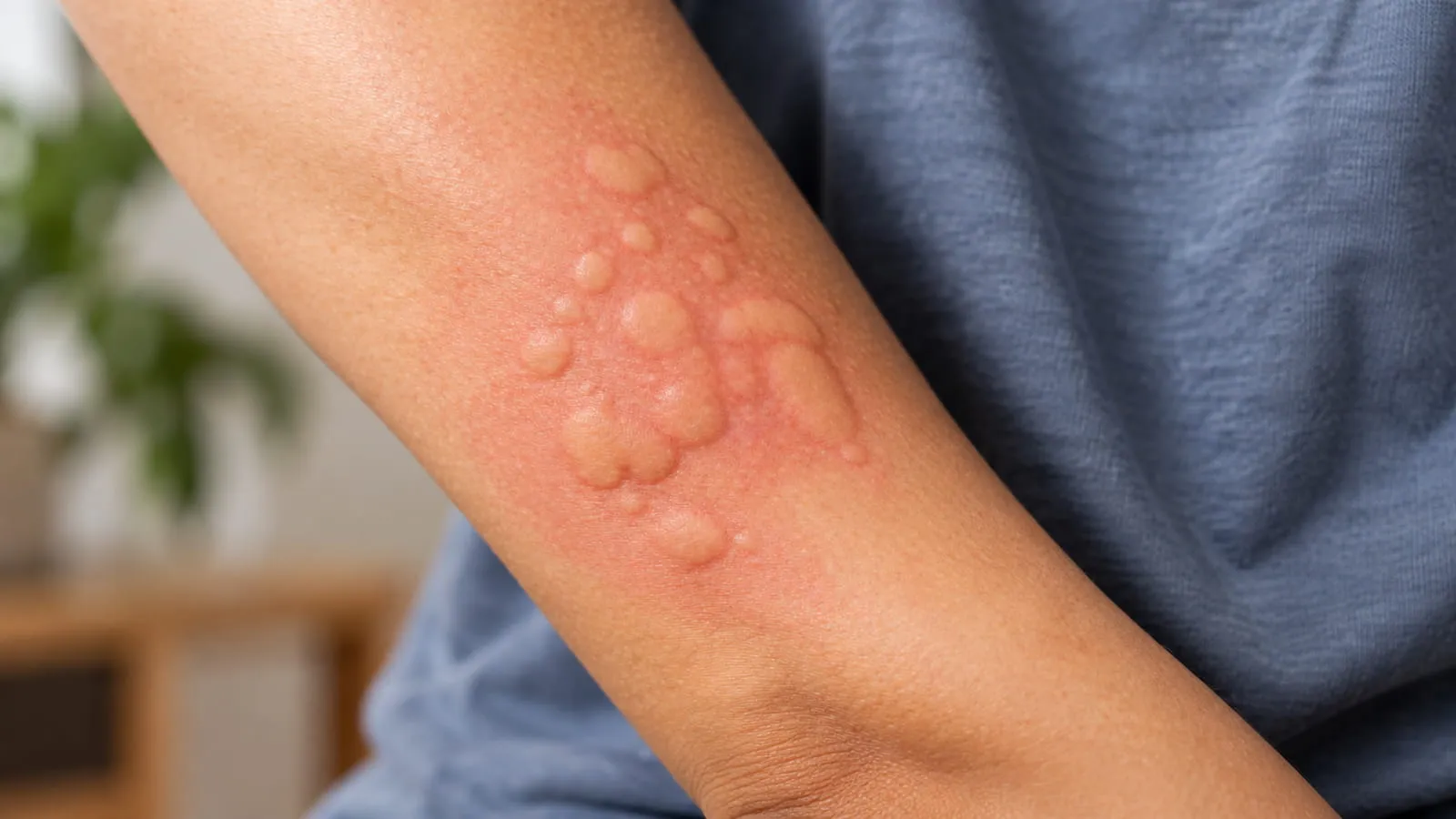
Hives that come and go for weeks. Then months. Antihistamines help, but only for a few hours. You start to wonder if this will ever end.
This is chronic urticaria — and it behaves very differently from the occasional allergic flare-up.
What Makes Urticaria "Chronic"
The distinction is straightforward:
- Acute urticaria — lasts less than 6 weeks
- Chronic urticaria — lasts more than 6 weeks
Most acute cases resolve on their own once the trigger is removed. Chronic cases are different — often no clear trigger is found, and symptoms persist for months or years.
Types of Chronic Urticaria
| Type | Description |
|---|---|
| Chronic spontaneous urticaria | No identifiable trigger; most common |
| Chronic inducible urticaria | Triggered by physical stimuli — pressure, cold, heat, water, exercise |
| Autoimmune urticaria | Linked to autoimmune conditions, e.g. thyroid antibodies |
| Chronic urticaria with angioedema | Hives with deeper swelling of lips, eyelids, or throat |
Knowing which type you have changes treatment.
Why It Keeps Coming Back
In acute urticaria, the trigger is usually external — a food, a medication, an infection. Remove the trigger, the hives stop.
In chronic spontaneous urticaria, the mechanism is different:
- The immune system releases histamine without an obvious external trigger
- The driver is often internal — an autoimmune tendency, a low-grade infection, stress, or a thyroid imbalance
- In many cases, no single cause is ever identified
That's why removing a food or changing a soap often doesn't help. The trigger isn't external.
Common Drivers of Chronic Urticaria
- Autoimmune tendency — the immune system attacks its own tissues, including skin cells
- Thyroid imbalance — both hypothyroidism and hyperthyroidism can trigger hives
- Low-grade infections — dental, sinus, gut, or urinary
- Chronic stress — sustained cortisol changes affect histamine response
- Medications — long-term use of certain pain relievers or blood pressure drugs
- Food additives — preservatives, colours, and flavour enhancers in sensitive people
A thorough case-taking looks at all of these, not just the skin.
How Chronic Urticaria Differs From Acute
| Feature | Acute Urticaria | Chronic Urticaria |
|---|---|---|
| Duration | Less than 6 weeks | More than 6 weeks |
| Trigger | Usually identifiable | Often unclear |
| Onset | Sudden | Insidious |
| Pattern | Single episode | Fluctuating |
| Response to trigger removal | Good | Often poor |
| Need for full case-taking | Moderate | High |
What Helps — and What Doesn't
Helps:
- Keeping a detailed symptom diary for weeks, not days
- Identifying patterns — stress, sleep, foods, menstrual cycle
- Managing stress — sustained stress is a common driver
- Avoiding known aggravators — alcohol, extreme heat, pressure
- Consistent treatment — chronic cases need months, not days
Doesn't help:
- Switching remedies every week
- Eliminating foods without evidence
- Stopping medication abruptly
How Treatment Approaches Chronic Urticaria
Because the driver is often internal, treatment focuses on the whole person, not just the skin.
In homeopathy, chronic urticaria is approached as a constitutional problem — one that involves the immune system, stress response, digestion, sleep, and general health. The remedy is selected for the individual pattern, not just the welts.
This is different from acute urticaria, where a single remedy for a specific trigger often helps. For a full explanation, see how homeopathy approaches urticaria.
Timeline: Chronic cases typically need 3–6 months of consistent treatment before lasting change is seen. Improvement is usually gradual — flare-ups become less frequent, less intense, and easier to manage.
What Treatment Can Realistically Do
- Reduce the frequency of flare-ups
- Reduce the intensity of flare-ups
- Reduce antihistamine dependence over time
- Address the underlying tendency — where one is identifiable
- Improve sleep, stress resilience, and general well-being
Not promised: a permanent cure, or immediate relief in an acute flare-up.
When to See a Doctor
Book a consultation if:
- Hives last more than 6 weeks
- Antihistamines no longer control symptoms
- Sleep is disturbed most nights
- You notice hives linked to pressure, cold, or heat
- You have swelling of the lips, eyelids, or throat alongside hives
Seek urgent care if you have difficulty breathing, throat swelling, or dizziness.
For a full picture of the condition, see our urticaria treatment page.
To discuss your own case, book an online consultation.
A Word from Our Doctors
Chronic urticaria is frustrating — but it's also treatable. The key is a full case-taking, patience, and consistency. If you'd like to find out whether homeopathy can help your case, book an online consultation.